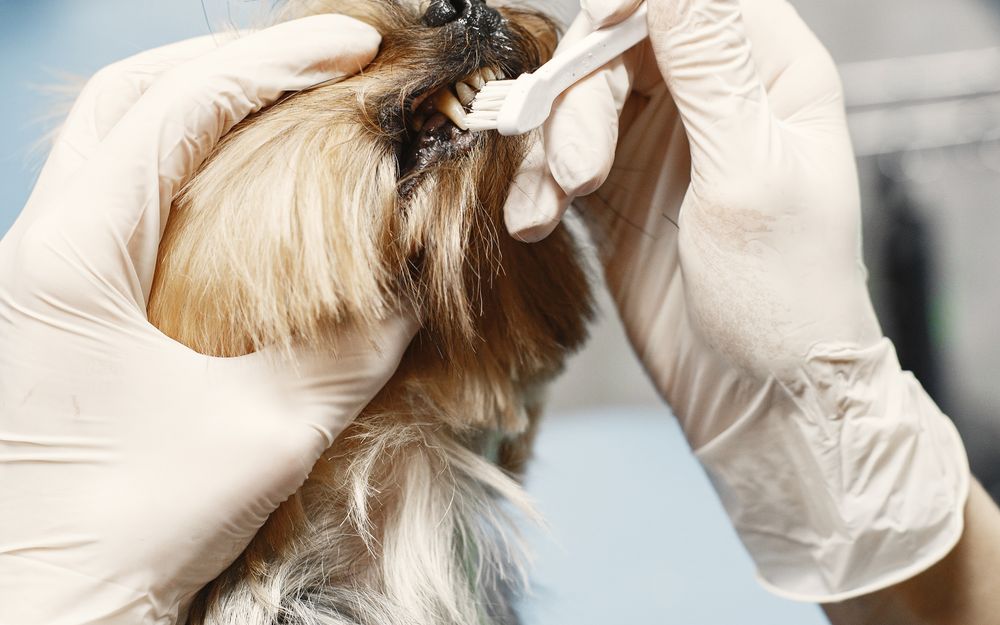
Choose a comfortable starting point
Set out a soft dog toothbrush and dog-specific toothpaste before you invite the dog over. Pick a quiet moment and let the dog approach the tools; do not hold the muzzle or force the mouth open. If the dog already avoids face handling, begin with calm contact near the shoulder or cheek rather than moving straight to the teeth.
Keep the first goal small enough to finish while the dog is relaxed. A veterinary team can show you a safe position and help decide whether an exam should come before home brushing.
Use products made for dogs
Use toothpaste labeled for dogs; human toothpaste is not intended to be swallowed by pets. Focus on the outer tooth surfaces and keep early sessions short. Brushing supports oral care but does not replace veterinary dental exams. Bad breath, drooling, bleeding, or trouble chewing are reasons to contact a veterinarian.
Build the steps in a calm order
Work in short sessions and stop before the dog tries to pull away. A practical progression is to reward looking at the toothbrush, then touching it with the nose, then accepting a brief lip lift, and only later feeling the brush against a few outer teeth. You may need several sessions at one step. If the dog becomes worried, return to an easier step instead of holding them still.
Choose a quiet time when the dog is already settled, and keep the brush and dog-specific toothpaste ready before you begin. Use a small amount and gentle movements; there is no need to force the mouth open. End with a reward and a clear break. A brief, comfortable practice is more useful than a long session that makes the next one harder.
Know when home brushing is not enough
Some dogs need an exam before you start, particularly if the mouth is painful or handling is difficult. Stop and contact a veterinarian if you notice bleeding, swollen gums, broken teeth, strong odor, drooling, or a change in eating. Do not scrape tartar with household tools or use human toothpaste. At-home brushing helps with ongoing care but cannot inspect below the gumline or replace a dental exam.
Make the goal a routine the dog can comfortably tolerate, not a perfect-looking mouth in a week. Keep the brush clean, replace it when bristles are worn, and ask your veterinary team to demonstrate a safe position for your dog. Their advice can be adjusted for age, dental history, and any treatment already planned.